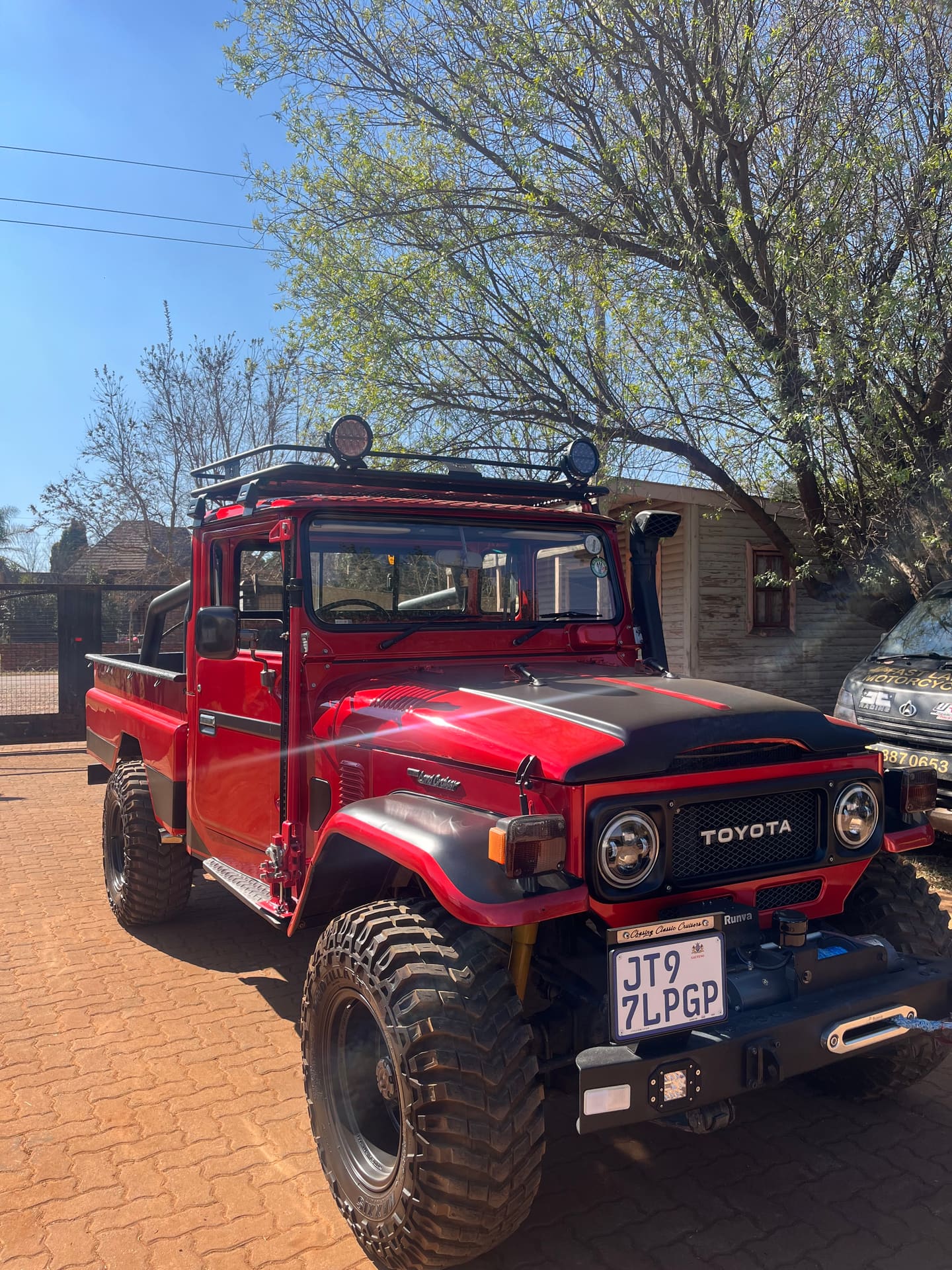
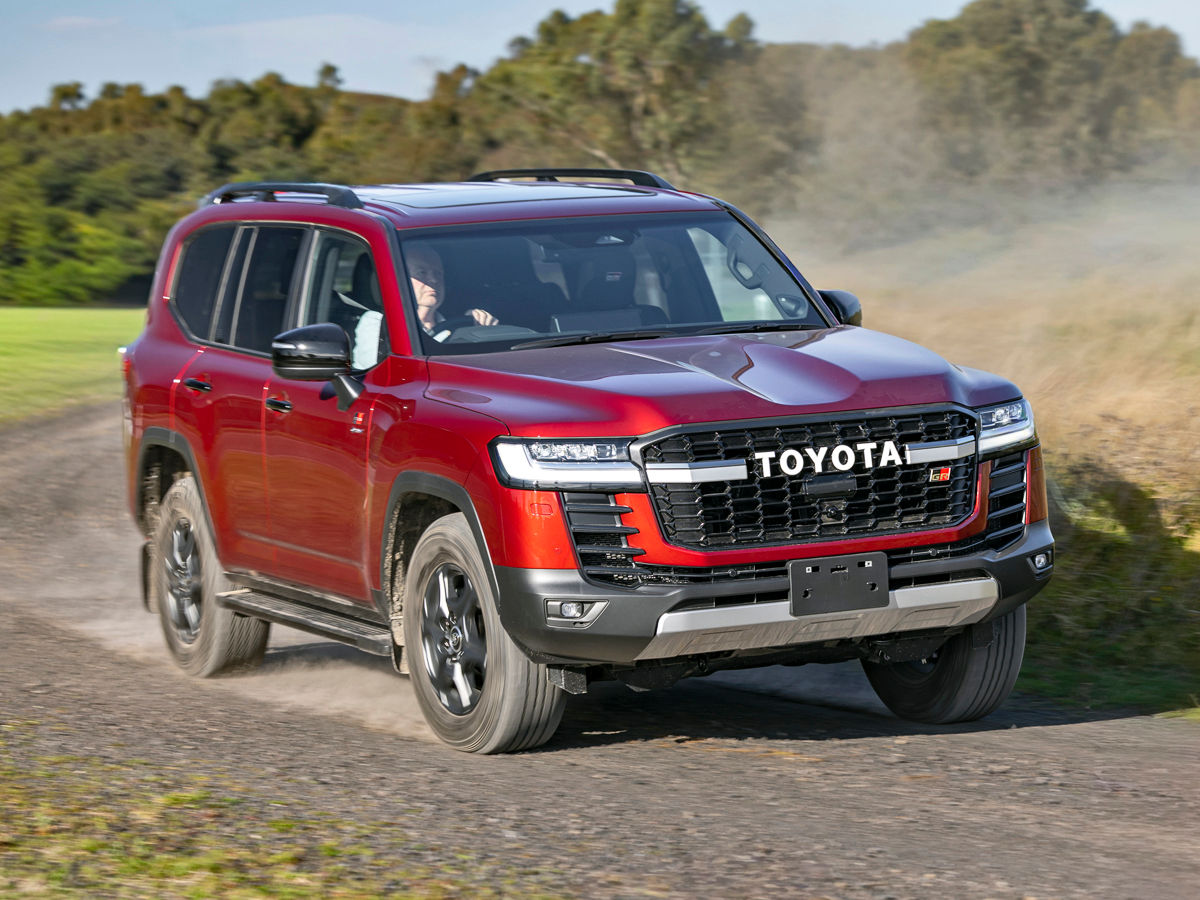
Toyota has done something South Africans have argued about for years: it has put a hybrid badge on the Land Cruiser 300. The 300 Hybrid landed in local showrooms in August 2026, and it arrives wearing a big number — 341 kW — which makes it, officially, the most powerful Land Cruiser Toyota has ever sold.
Before the diesel faithful reach for the pitchforks, it’s worth understanding exactly what this thing is, what it costs, and — the question that actually matters — whether it’s the 300 you should be buying, or whether the diesel most South Africans already choose is still the smarter call.
The headline numbers
The hybrid uses Toyota’s 3.5-litre twin-turbo V6 petrol engine paired with a single electric motor and a small 1.9 kWh lithium-ion battery, driving through the familiar 10-speed automatic. Together they make:
- 341 kW of power and 790 Nm of torque
- 36 kW and 140 Nm more than the non-hybrid 3.5-litre petrol
- A claimed 10 L/100km combined (versus 11.6 for the non-hybrid petrol)
- 3,500 kg braked towing capacity
- A claimed 40% sharper throttle response than the 3.3-litre diesel
It comes in two grades:
| Model | Price |
|---|---|
| Land Cruiser 300 3.5T HEV ZX | R2,287,700 |
| Land Cruiser 300 3.5T HEV GR-Sport | R2,343,800 |
That takes the 300 range to six derivatives, and it slots the hybrid in right at the top of the price list.
First, what kind of hybrid is this?
This is the part that trips people up, so let’s be clear: it is not a plug-in. You never charge it from a wall.
The electric motor sits between the engine and the gearbox, fed by that small battery, and the system charges itself as you drive — recovering energy under braking and coasting, then feeding it back to add muscle and smooth out the power delivery. There’s no real electric-only range. Think of it as a performance-and-refinement hybrid, not a fuel-sipping city hybrid. Its job is to make the 300 faster and more responsive, with a modest economy gain on the side.
That’s why the number that jumped is power, not economy. At 341 kW this is a genuinely quick three-tonne SUV, and Toyota’s claim of 40% sharper throttle response is the kind of thing you feel every day, not just on a spec sheet.
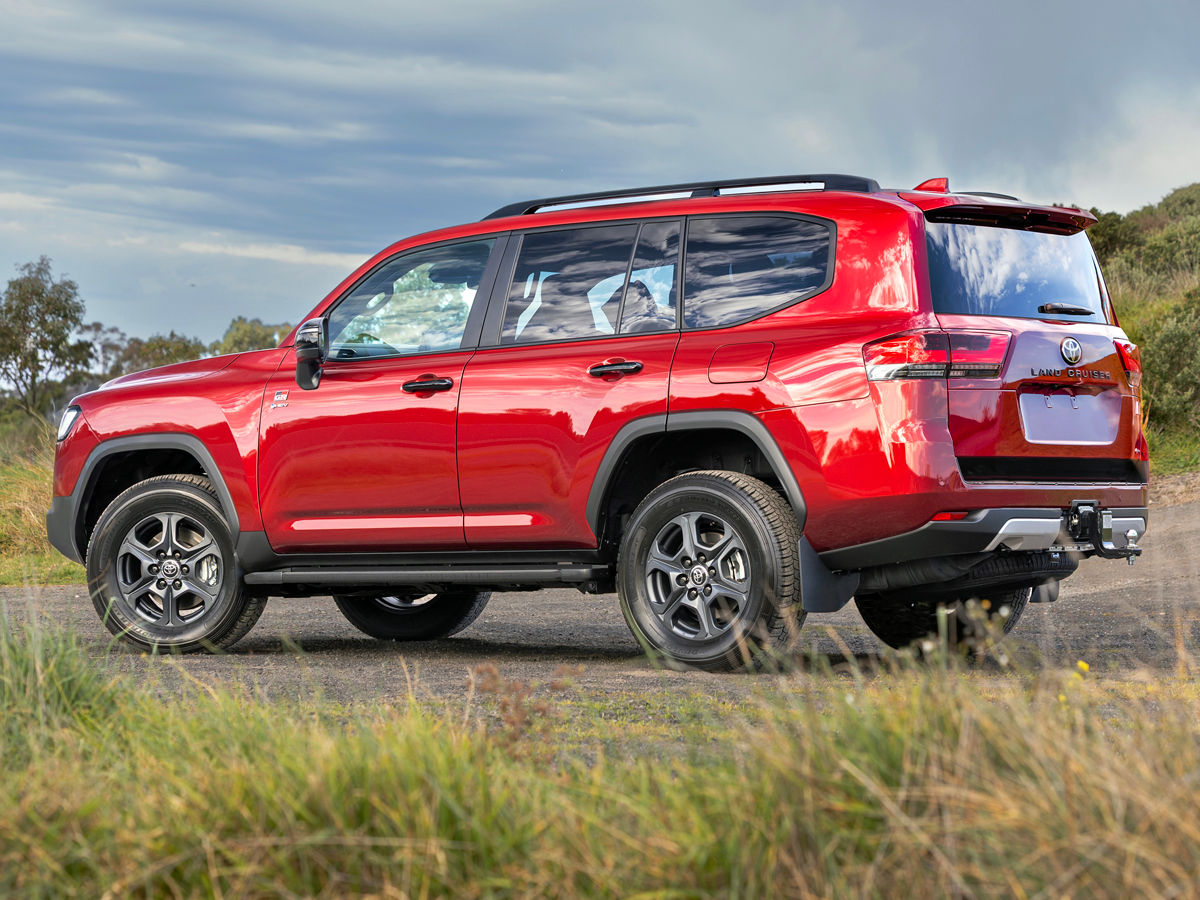 The hybrid keeps the full 3,500 kg braked towing rating — but the diesel is still the long-haul tower’s default in SA.
The real question: hybrid petrol vs the diesel
Here’s where South Africa is different from most markets. Overseas, “Land Cruiser 300” usually means the petrol. Here, the 3.3-litre V6 turbodiesel (225 kW / 700 Nm) is the one that sells — because of how we actually use these vehicles: long distances, heavy loads, remote fuel, and an eye firmly on resale.
Here’s how the three drivetrains actually compare:
| 3.3D Diesel | 3.5T Petrol | 3.5T Hybrid | |
|---|---|---|---|
| Power | 225 kW | 305 kW | 341 kW |
| Torque | 700 Nm | 650 Nm | 790 Nm |
| Claimed economy | ~8.9 L/100km | 11.6 L/100km | 10 L/100km |
| Braked towing | 3,500 kg | 3,500 kg | 3,500 kg |
| Best suited to | Touring, towing, remote travel, resale | Outright petrol pace | Max power, refinement, mostly tar |
Now stack them up on the things that matter here:
- Economy: the diesel wins. About 8.9 L/100km claimed versus the hybrid’s 10 L/100km — and diesel is cheaper per litre. Over a big-kilometre touring life, that gap adds up.
- Range and remote refuelling: the diesel wins. Better range from a tank, and diesel is the fuel you’ll reliably find in the small Karoo and bushveld dorpies where you least want a fuel worry.
- Towing and load: roughly a draw on paper (both 3,500 kg), but the diesel’s fat low-down torque is what long-distance caravan and boat towers tend to prefer.
- Outright performance and refinement: the hybrid wins, comfortably. It’s quicker, smoother and more responsive than anything else in the range.
- Resale: advantage diesel, for now. Diesel 300s have the strongest resale track record in SA. A petrol hybrid is new territory here, and how the used market values it is still an open question — worth thinking about if you change cars often.
So the honest verdict: if you’re a tourer, a farmer, or anyone who racks up long rural kilometres and tows regularly, the diesel is still the sensible Land Cruiser. The hybrid is for the buyer who wants the flagship — the most powerful, most polished 300 — and does most of their driving on tar, with towing and outright ability as a bonus rather than the whole point.
Don’t buy the hybrid to save fuel
This is the part the spec sheets gloss over. The word “hybrid” makes people assume “cheaper to run” — but in this case, against the diesel, the hybrid actually costs more at the pump. It uses more fuel (a claimed 10 L/100km versus about 8.9 for the diesel), and it burns petrol, which is pricier per litre than diesel in SA.
Do the rough sum at 20,000 km a year and current pump prices: the hybrid gets through around R6,000–R7,000 more fuel every year than the diesel — and that’s before its higher purchase price. Its efficiency figure only looks good next to the thirstier non-hybrid petrol (11.6 L/100km); next to the diesel most South Africans buy, it’s the more expensive car to feed. You’re paying for power and polish, not economy — so buy it for that, with eyes open.
What you get for R2.3 million
Both hybrid grades are loaded. The ZX is the luxury-focused variant, with leather trim, heated and ventilated front seats, a heated steering wheel, adaptive LED headlights, a powered tailgate, fold-down third-row seats, a JBL sound system with rear-seat entertainment, and Toyota Safety Sense driver aids. The GR-Sport trades some of that polish for a more aggressive, off-road-flavoured look.
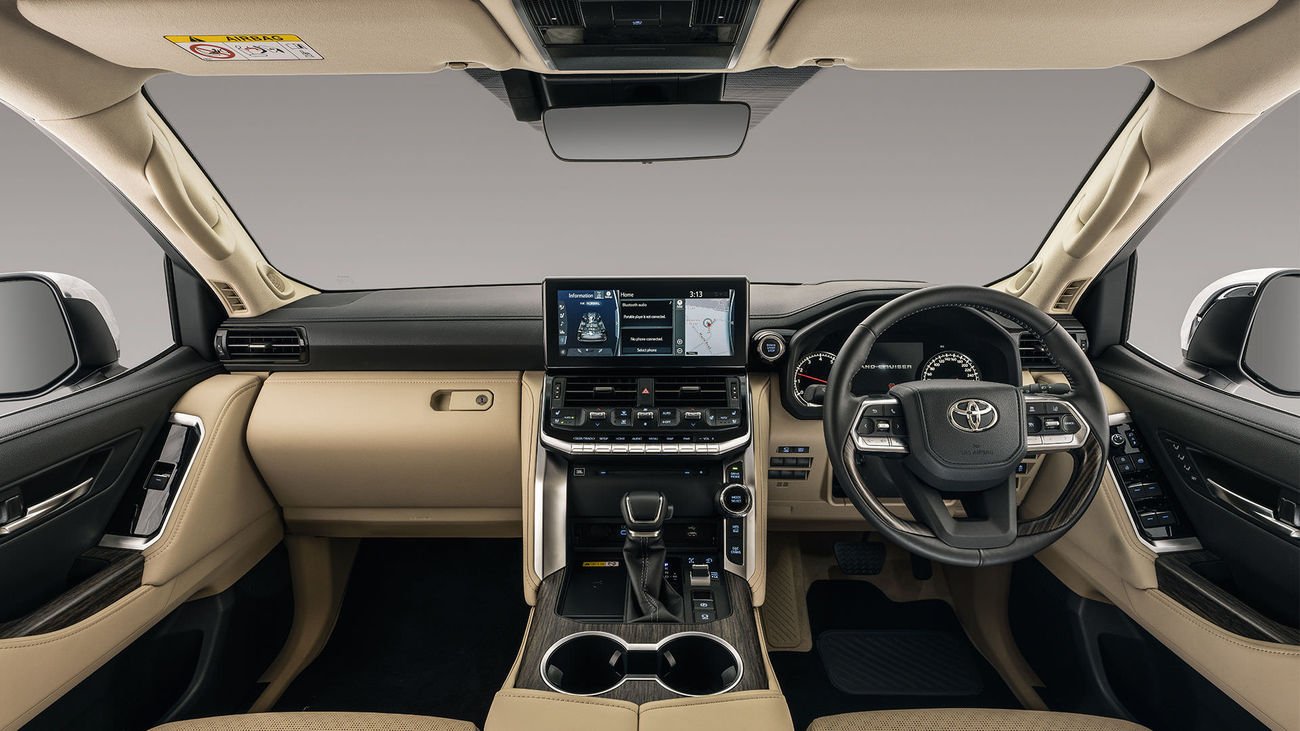 Inside the ZX: the 300’s familiar high-end cabin, now fronting the most powerful drivetrain Toyota has ever put in a Land Cruiser.
On the ownership side, the hybrid comes with a 3-year/100,000 km warranty, a 9-service/90,000 km service plan, and — importantly for anyone nervous about hybrid tech — an 8-year/160,000 km warranty on the HEV battery. That battery cover matters: it’s Toyota’s answer to the “what happens when the hybrid bits get old and far from a dealer” question, and it takes some of the resale risk off the table.
Price in context
At R2,287,700 to R2,343,800, the hybrid is a serious step up. For perspective, across our daily-updated listings the median asking price for a used 300 Series is around R1,699,950, with most of the market sitting well below the new hybrid’s sticker. You’re paying a real premium here — for brand-new metal, the newest tech, and that headline power figure.
And right now it’s genuinely rare. As of August 2026, of the roughly 321 used Land Cruiser 300s on the South African market we track every day, exactly one is a hybrid. This is brand-new metal — you’re buying new, or waiting a few years for used examples to start trickling through.
If you’re weighing new-versus-used, or just want to see where the whole 300 range sits right now, our live market data is the place to start.
The verdict
The 300 Hybrid is an easy vehicle to admire and a harder one to need. It’s the most powerful, most refined Land Cruiser money can buy in South Africa, and the 8-year battery warranty shows Toyota has thought about the long-tail worries. But it’s also the most expensive 300, running a petrol drivetrain in a market that has always chosen diesel for very good, very local reasons.
Buy it if you want the flagship and drive mostly on tar. If you’re heading north with a caravan behind you and a long way between fuel stops, the diesel is still the Cruiser that was built for the job.
Specs and pricing sourced from Toyota SA via Cars.co.za. Images: Toyota. Asking-price figures are aggregated daily from live South African listings and are advertised prices, not final sale prices.