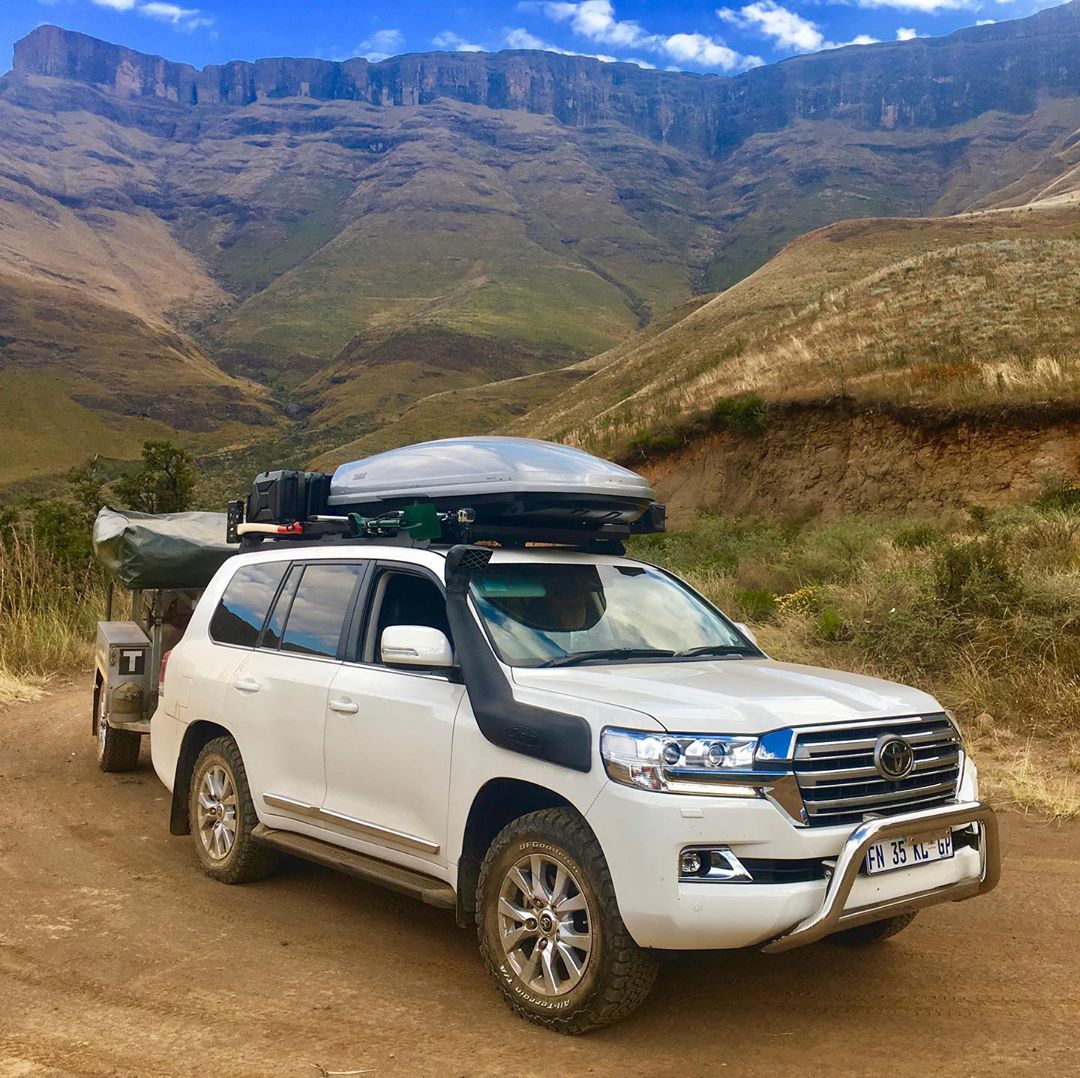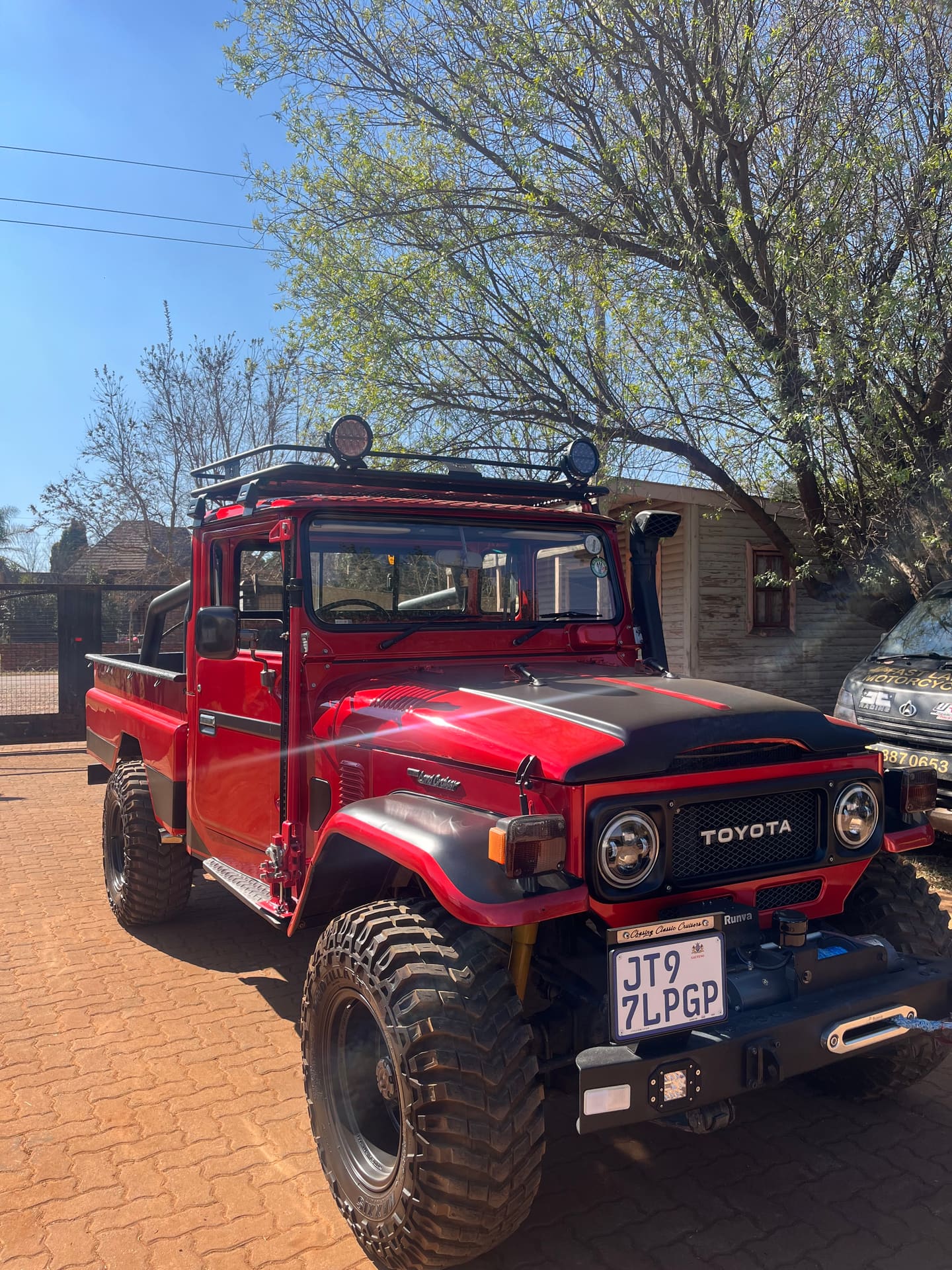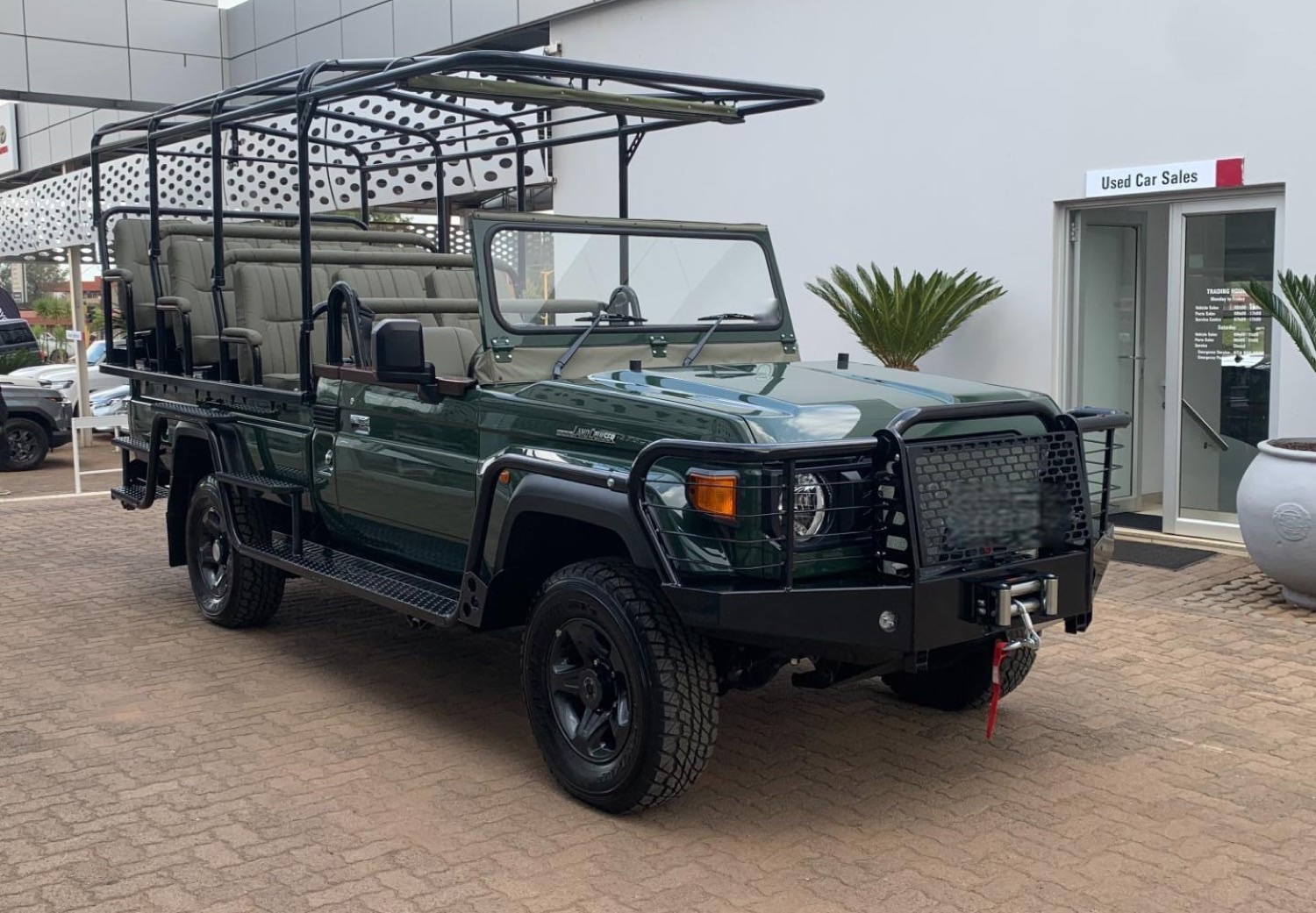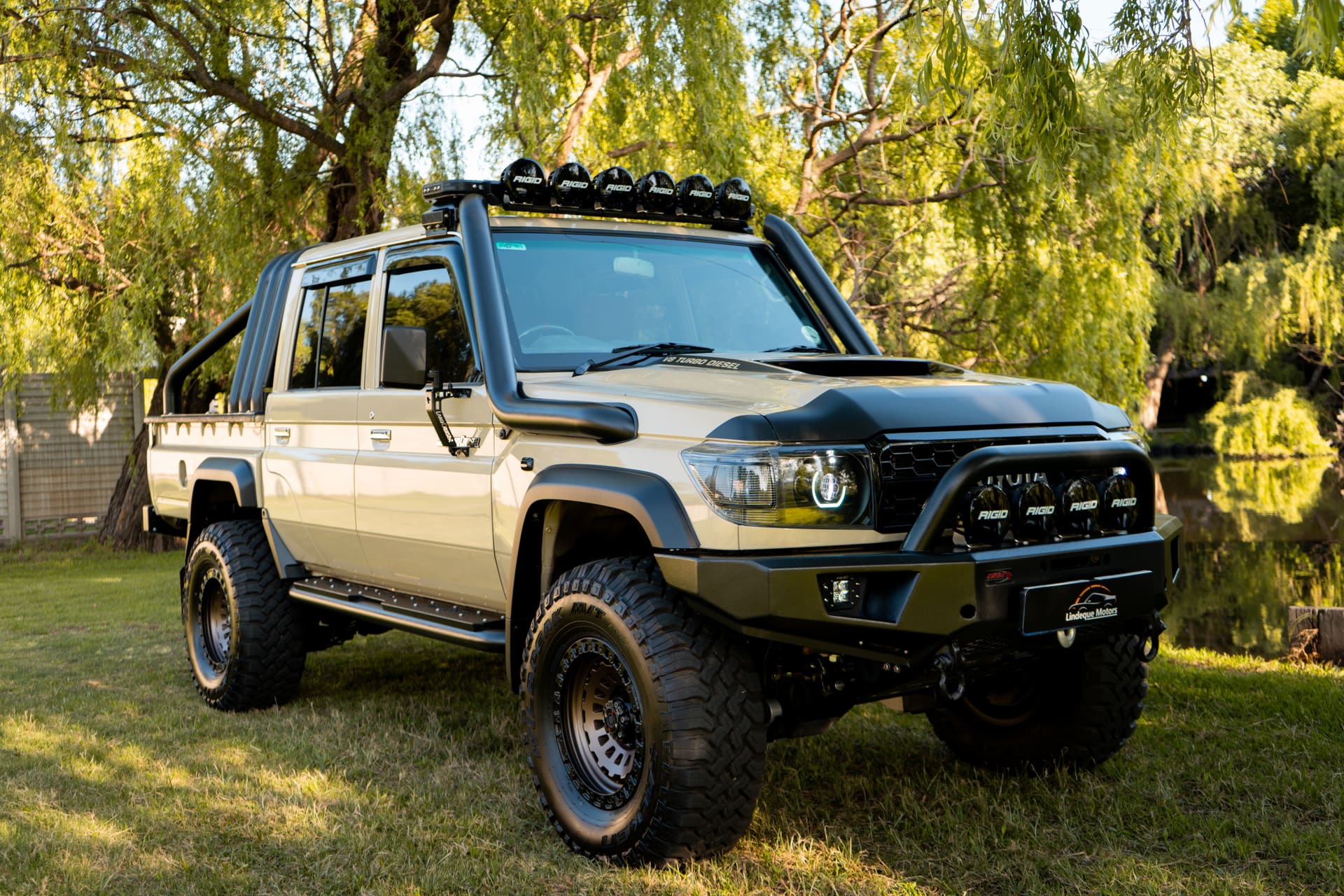
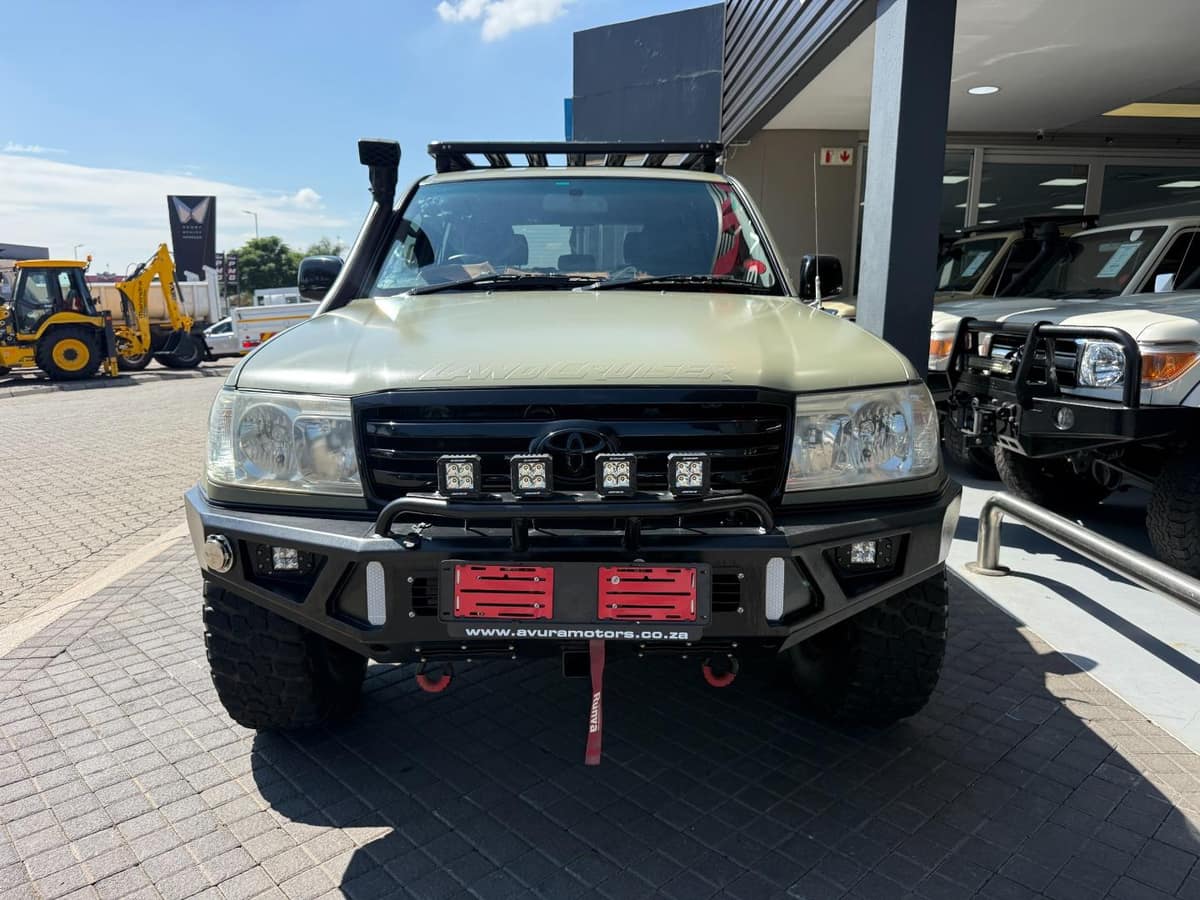
A good Land Cruiser bull bar — or brushbar as they are sometimes referred to — is not necessarily the most essential accessory in the upgrading of your Land Cruiser, but it certainly is pretty high on the list of “desirables”. While they do lend themselves to the aesthetic appeal of the vehicle, there is undeniable added value in the robustness and durability of your pride and joy.
Much more consideration should be applied to this purchase than just the rugged appearance of the finished product. The pricing varies quite considerably, as does the quality, functionality, and weight. Without discounting your dreams of where your vehicle will be used, decide beforehand what your primary function will be. Once your budget has been established you can then apply your mind to where to source your Land Cruiser bull bar most affordably. This process should very often be concluded in the privacy of your study — wives (also sometimes referred to as ‘she who must be obeyed’) very often fail to view the finished product with the same enthusiasm as their aspirant “Camel Adventure” husbands.
What is a Bull Bar?
Simply put, a Land Cruiser’s bull bar is there to protect your Land Cruiser from obstacles in your path — be they stationary, as most trees and rocks tend to be, or having been endowed with four legs and being somewhat unpredictable in their thought processes. When that bony cow stands gazing at you as you negotiate that dusty bend in the lower reaches of Zambia, your three choices are left, right, or straight ahead — and they need to be addressed with alacrity.
While safety and functionality are the primary purpose of bull bars, they also allow for the accommodation of a myriad of accessories: spotlights, winches, radio antennae, and more.
Bull Bar Materials
Bull bars are primarily made from steel, which tends to be the stronger and more resilient option, but carries a weight penalty. This would often lead to a suspension upgrade. Another very popular choice is aluminium, which substantially reduces the weight but increases the price. Some bull bars are also made of highly impact-resistant composite material — which, to conventional old-school thinking, does not inspire confidence.
Types of Bull Bars For Your Land Cruiser
There are really just two types of bull bar: a single-type design or a multi-post design.
Multi-Post
Multi-post designs use tubular steel bars above the main bumper plate to protect the lights and grille, while thick metal protects the lower half of the front of the vehicle, including the lower parts of the radiator.
Single-Post
The single design bull bars have traditionally been the same as multi-post designs, minus the tubular steel bars protecting the lights and top half of the radiator. Nowadays, however, single/bikini bumpers are becoming increasingly popular due to their sleek designs and lighter weight, while still offering high levels of lower-body protection.
Modular bull bars are the latest thing to hit the market and offer the benefit of individually replaceable components, so if you damage only a section of the bar, just that section can be replaced.

What To Consider When Buying A Land Cruiser Bull Bar
The design of any bull bar greatly affects what your Land Cruiser is going to be able to do. Things like airflow through the radiator is vital — impaired airflow could lead to overheating of your engine, which is a very expensive, never mind inconvenient exercise. Spotlight size and placement also need to be carefully considered.
You essentially want to choose the bull bar that is going to complement your Cruiser. But don’t forget to consider the build quality as well. The bull bar you select should be made from high-quality materials and feature perfect welds and bends.
High-lift jack and recovery points
Further considerations on any bar application would be both hi-lift jacking points and recovery points. There are those that have been stuck and those that will be. If you are in any way utilising your vehicle for its intended purpose, you will inevitably need to be recovered from a tricky or sticky situation.
The large majority of bull bars do come with high-lift jack points. But it’s always a good idea to check this with the manufacturer before making your decision.
Recovery points, also known as tow-rated points, are arguably the best addition to any bull bar. If a bull bar has a rated recovery point it means that the manufacturer has sought the necessary engineering advice and got sign-off that their product is up to scratch. If you’re at a standoff between two final choices and one has recovery points and the other doesn’t — choose the one with rated recovery points. You can thank us later.
Does a bull bar’s weight affect the handling of my Land Cruiser?
You may notice a small drop (approximately 15–20mm) on the front suspension depending on the vehicle. The front of your Land Cruiser will feel a little softer, and unfortunately one of the downsides of most bull bars is a decrease in handling and braking performance.
This can however be countered in the form of heavier duty shock absorbers, springs, or leaf springs, depending on which vehicle you’re modifying to accommodate the extra load.
What is ADR compliant and should I care?
ADR stands for Australian Design Rules — international standards for vehicle safety, anti-theft, and emissions. Yes, you should care about this.
An ADR compliant bull bar has more to do with pedestrian safety than anything else. If your bull bar has an ADR certificate, you are doing it right.
Key requirements relevant to bull bar construction:
- A bull bar must not tilt forward more than 100mm from its base
- Must have rounded corners and edges with chamfered or rounded flanges
- Must flow with the shape of the front of the vehicle
- Brackets must not be exposed as to cause injury in an impact with a pedestrian
- The bull bar must not exceed the width of the vehicle, including its mirrors
- Indicators must not be obscured (or an auxiliary set must be fitted)
- The number plate must not be obscured
- A bull bar must have more than 100mm of ground clearance
In South Africa, authorities are quite laid back when it comes to bull bar regulations. As long as the mounting point for your number plate is unobstructed and secured, you’re safe.
How safe are bull bars in a crash?
Newer 4x4s are designed with safety as the main priority. Because bull bars are rigid and mounted directly to a vehicle’s chassis, standard crumple zones are somewhat made redundant. The better bull bar manufacturers have included crumple zones in their designs to reach a compromise between crash safety and outright rigidity.
Depending on the type of terrain driven, airbags have been known to deploy in non-critical encounters. It is always advisable to check with both the supplier of your product of choice and the vehicle manufacturer, to establish the most suitable combination for your vehicle. Fitting certain accessories could also nullify your manufacturer’s warranty, so careful consideration should be applied.
Does a bull bar need to work with my Land Cruiser’s electronics and engine bay?
For the most part, yes. However, it’s pretty uncommon that a bull bar manufacturer will make their product incompatible with Land Cruiser electronics. On older models of Cruiser, this should still be checked. In terms of moving components around in the engine bay, the biggest issue is sometimes just having to relocate a windscreen washer water bottle.
Our 2 Cents
Ultimately the considerations to keep in mind are a combination of budget, application, aesthetic value, safety, and warranty.
So after all, there is a bit more to it than seeing how many man points you can add to your Land Cruiser. Once you’ve narrowed down the style and the material, then it becomes much simpler. Knowing to look for those subtle differences in styling, build quality, tow points, jack points, safety rating, and weight could save you heaps of snot en trane down the line.
One final thought: you need to be confident in the bull bar you are buying based on all the above factors. If it doesn’t inspire confidence, leave it and find another one.