Ask “what is my car worth?” and you have really asked three questions. What will a dealer pay you? What would a dealer sell it for? And what does “market value” mean? The answers can be tens of thousands of rand apart on the same car. The right one depends on why you are asking.
Most of the time the number only needs to live in your head. But now and then you need it in writing. That happens when you settle an estate, deal with SARS, insure the car properly or show a buyer your price is fair. That is where a valuation certificate comes in.
Here is how car values work in South Africa, who sets the numbers, and when you need one on paper.
The three numbers: trade, retail and market
| Value | In plain words |
|---|---|
| Trade | What a dealer would pay you for the car |
| Retail | What a dealer would sell the car for |
| Market | No single meaning. Usually between the two, but your insurer defines it |
Trade value is what a dealer pays to buy your car. It is usually the lowest figure. The dealer still has to prep the car, keep it on the floor and make a margin. The motor trade calls this “book value”, or just “the book”.
Retail value is the price on the dealer’s floor. It covers what the dealer paid, getting the car showroom ready, and his profit. It is roughly what you would pay to replace the car from a dealer.
Market value is the slippery one. There is no single meaning in South Africa. One insurer calls it a middle figure that the insurer itself defines. Another starts from retail and adjusts for kilometres, condition and extras, which lands closer to a private-sale price. An Ombud official once even called market value the lowest of the three. So read your policy wording. Our guide to market value vs retail value vs trade value covers the differences in full.
The gap between trade and retail is the key thing to understand. It explains why a cash offer always feels low. You are being quoted a trade number. You were picturing a retail one.
Who sets these numbers
The main book is TransUnion’s Auto Dealers’ Guide. Many people still call it “M&M”, after Mead & McGrouther, who first published it in 1960. The printed copy stopped in October 2022, and it is digital now. It lists a retail and a trade value for each model. TransUnion says dealers, banks and insurers all use it. The values change every month.
Lightstone also sells dealer and consumer valuations. They are built from sales that banks financed.
So the figure your bank uses, the figure your insurer uses and the figure a dealer quotes you come from the same few sources. Only the motor trade sees the full guide. You can buy a TransUnion or Lightstone report for a small fee.
What the book does not show is what similar cars ask on live listings right now. The book is an average price for an average car. A kitted 79 with a canopy and a long-range tank is not average. That is why a book value and a live asking price are not the same thing.
Why an instant offer always feels low
A dealer’s buying desk or an instant-offer buyer gives you a trade-level cash offer. That is not a trick. It is the price of speed and certainty. The buyer takes the car, the risk and the admin off your hands today, and builds in a resale margin.
Two things to know:
- An online offer is only a first estimate. It becomes firm once someone inspects the car. The number can move once a person looks at the paint, tyres, service book and any knocks.
- A written dealer valuation shows that dealer’s offer on that day. It is real evidence of a trade figure. But it is the trader’s buying price, not an independent valuation.
Want to sell fast? A trade offer is the right tool. Want to know what the car is worth, for anything official? Then you need an independent figure on paper.
The accreditation myth
Many South Africans get this wrong: there is no legally “accredited” vehicle valuer in South Africa.
Property is different. A property valuer must register with the South African Council for the Property Valuers Profession (SACPVP). That rule comes from the Property Valuers Profession Act 47 of 2000. Practising without registration is an offence. That is a real licence.
No such body exists for cars. Nobody licenses car valuers, and no Act regulates them. So “accredited vehicle valuer” is a marketing phrase. There is nobody to be accredited by.
That changes what makes a valuation worth trusting. With no licence to lean on, it comes down to three things:
- Independence. The valuer has no stake in the deal.
- Method. The value rests on recognised data and a clear method you could repeat.
- Date. Values move, so a valuation is only as good as the day it was made.
An independent, dated figure with evidence holds up. A number you made yourself for your own deal does not. It may not be wrong, but it is not at arm’s length (made by someone with no stake in the deal).
When you need a valuation in writing
Most of the time you don’t. Here are the times you do.
Selling to your own company or a family member
This is the one that catches people. Say you sell a car to a connected person, such as your own company, a family member or a trust. If the price is below fair value, SARS can use section 58(1) of the Income Tax Act. It can treat the shortfall as a donation, and that can mean donations tax.
Donations tax is 20% of the amount above the yearly exemption. For individuals that exemption is R150,000 in the 2026/27 tax year, up from R100,000.
Two related points:
- Does the company then let you use the car privately? That is a company-car fringe benefit. It is taxed monthly at 3.5% of the car’s determined value, or 3.25% with a maintenance plan. So a value you can defend matters here too.
- Your protection is a dated, independent valuation at fair value. It shows the deal was at arm’s length. SARS and auditors give little weight to a value you made yourself for your own deal.
This is general information, not tax or legal advice. For a specific deal with a connected person, ask a registered tax practitioner to sign off.
Settling a deceased estate
A car in a deceased estate goes in at its fair market value on the date of death. This is the tax and estate meaning of the phrase, not your insurer’s “market value”. The executor puts that figure in the liquidation and distribution account. That account is lodged with the Master of the High Court. A dated, independent valuation tied to the date of death is the cleanest evidence an executor can attach.
Insuring the car properly
South African policies insure your car at retail, market or trade value. Retail pays out the most and costs the most each month. Trade pays the least and costs the least.
After a theft or write-off, the insurer works out the value on the day of the loss. It usually uses the book, adjusted for kilometres and condition. The amount on your schedule is a ceiling, not a promise. You get the lower of the two. Extras such as a canopy or bull bar must be listed, or they are not in the payout.
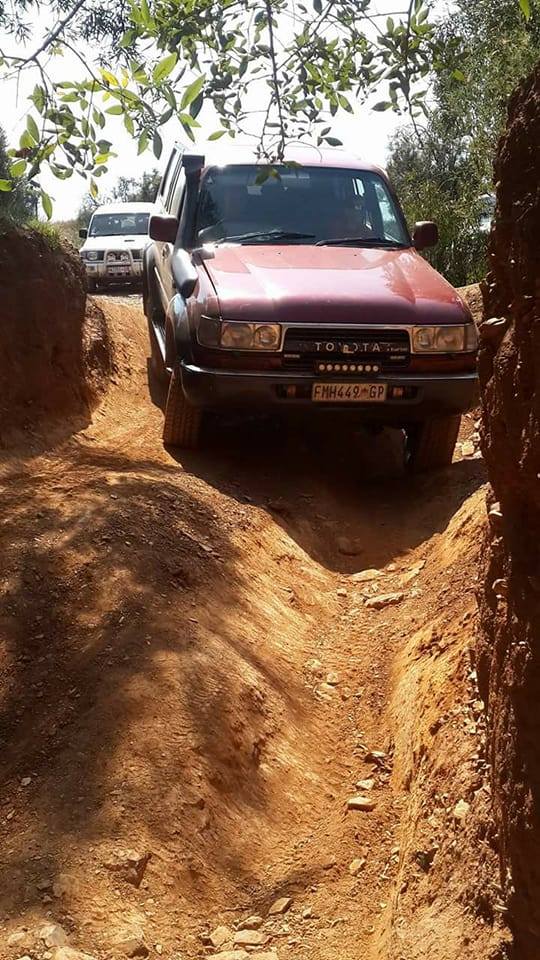
A modified Cruiser or a classic is often priced badly by the book. Agreed-value cover can fix that, but you will need proof of value. That is a job for a dated valuation certificate.
A straight private sale
No certificate is needed. But a value based on evidence beats pricing on hope. It tells you where to list and where you are likely to sell. It also gives a buyer something to trust. Remember that asking and selling prices are never the same. The asking price is where haggling starts, not where it ends.
Divorce and splitting assets
When cars are part of a split, both sides need a value they agree is fair. An independent, dated figure is far harder to argue with than a number one spouse found in an advert.
What makes a valuation hold up
With no licence to fall back on, a car valuation is only as strong as these four things:
| What | Why it matters |
|---|---|
| Independence | The valuer has no stake in your sale. A number you made for your own deal is not arm’s length. |
| Recognised method | Built on real data (similar cars on live listings, the trade and retail book), not a guess. |
| Evidence | Shows its working: the similar cars, how many, and the range. |
| A date | Values move every month. An undated valuation is worthless. |
For anything high-stakes, use two sources. One is an independent figure from live listings: what similar cars ask right now. The other is the trade and retail book from TransUnion or Lightstone. Together they give you the real-world number, the book number and an arm’s-length paper trail.
How to get a vehicle valuation in South Africa
| Source | What it gives you | Best for |
|---|---|---|
| Dealer or instant cash offer | A trade-level offer, firm only after inspection | Selling fast, today |
| TransUnion or Lightstone | The trade and retail book values | Banks, insurers, formal references |
| Land Cruiser SA valuation | Free: what similar cars ask on live listings and a realistic selling range, plus a dated certificate | Sanity checks, private sales, supporting evidence |
Own a Land Cruiser, Hilux or Fortuner? Our free valuation tool shows what similar cars ask on live listings, tracked daily, and a realistic selling range. You can download a dated certificate to keep. It is not your insurance value, and it is not the TransUnion figure.
This article is general information for South African vehicle owners. It is not tax, legal or financial advice. For a specific deal, especially one involving SARS, a deceased estate or a sale to a connected person, ask a registered tax practitioner, an attorney or your insurer.