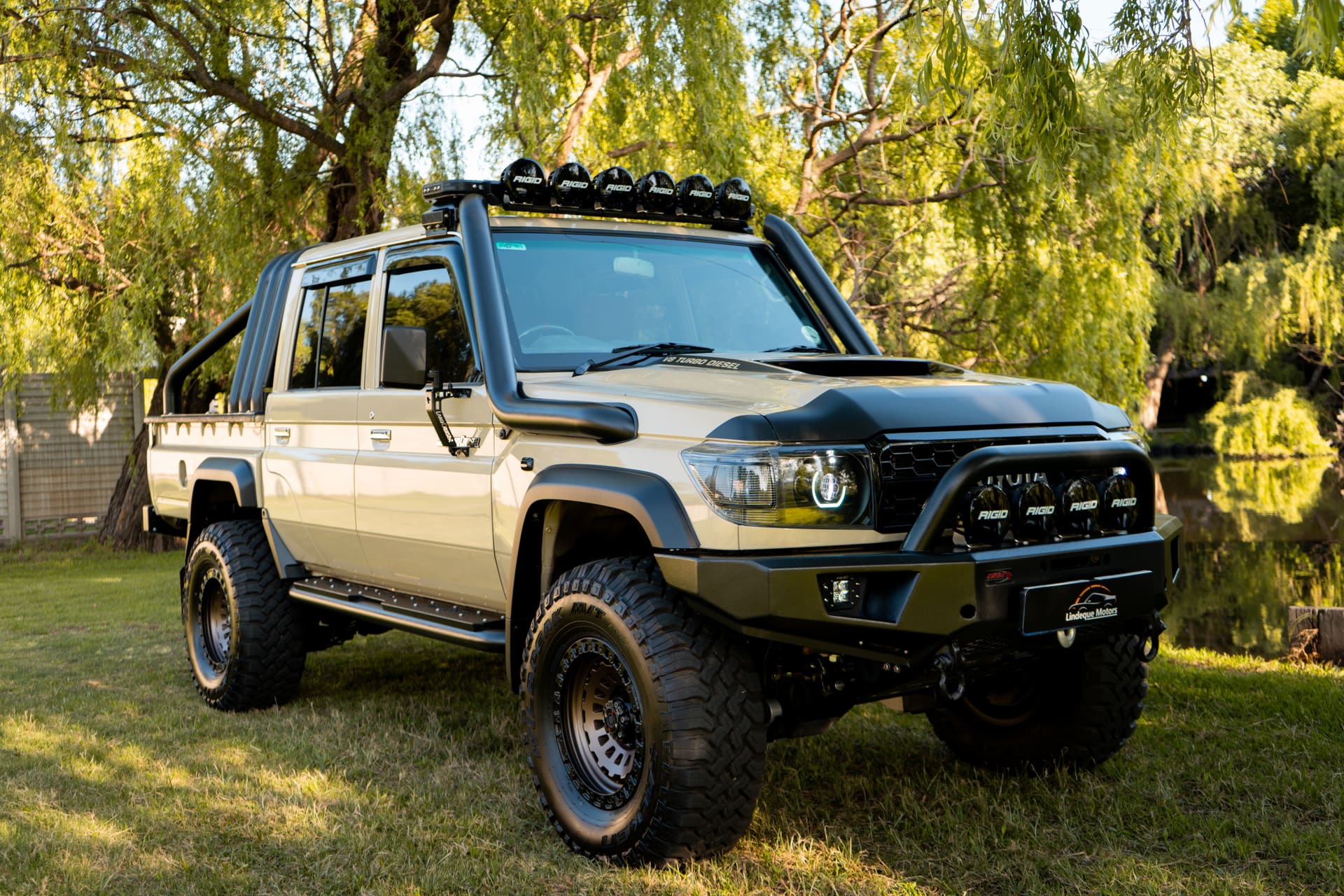
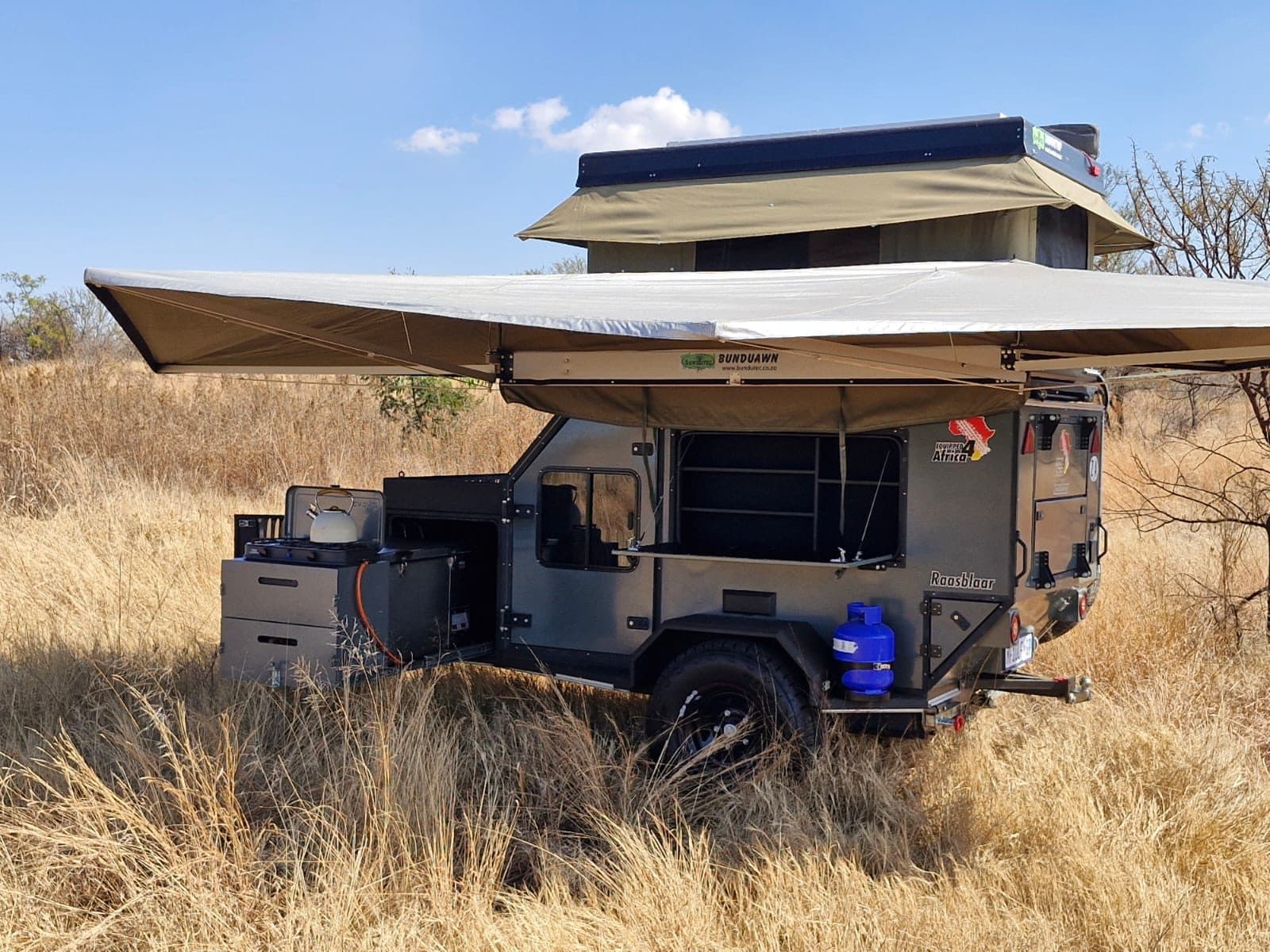
A camper trailer is the other half of a great South African overland setup. If you already own a Land Cruiser (or you’re renting a fully-equipped one), towing a kitted trailer or off-road caravan behind it gives you a proper basecamp without the cost of buying one outright. And if you only need it for a trip or two a year, renting makes far more sense than owning.
This guide covers the two ways to rent a camper trailer in South Africa, what it actually costs, the towing and licence rules that catch people out, and exactly what to check before you book.
Quick answer: There are two ways to rent a camper trailer in South Africa: peer-to-peer (renting a private owner’s trailer through Kampi, from around R519/day, the widest choice but variable quality) or from a fleet specialist such as Conqueror, Kubu 4x4, Go Camp, CampEzi or Bundu (professionally maintained and fully kitted, roughly R600 to R1,500/day). Most off-road trailers and caravans need a Code EB licence to tow legally (anything over 750 kg GVM), and check your Cruiser’s tow rating: 3,500 kg braked on the 2.8 and V8 79 and the 76, but only 1,500 kg on the 4.0 petrol and 4.2 diesel 79 and the 78. Always confirm the insurance scope and a breakdown plan before you pay.
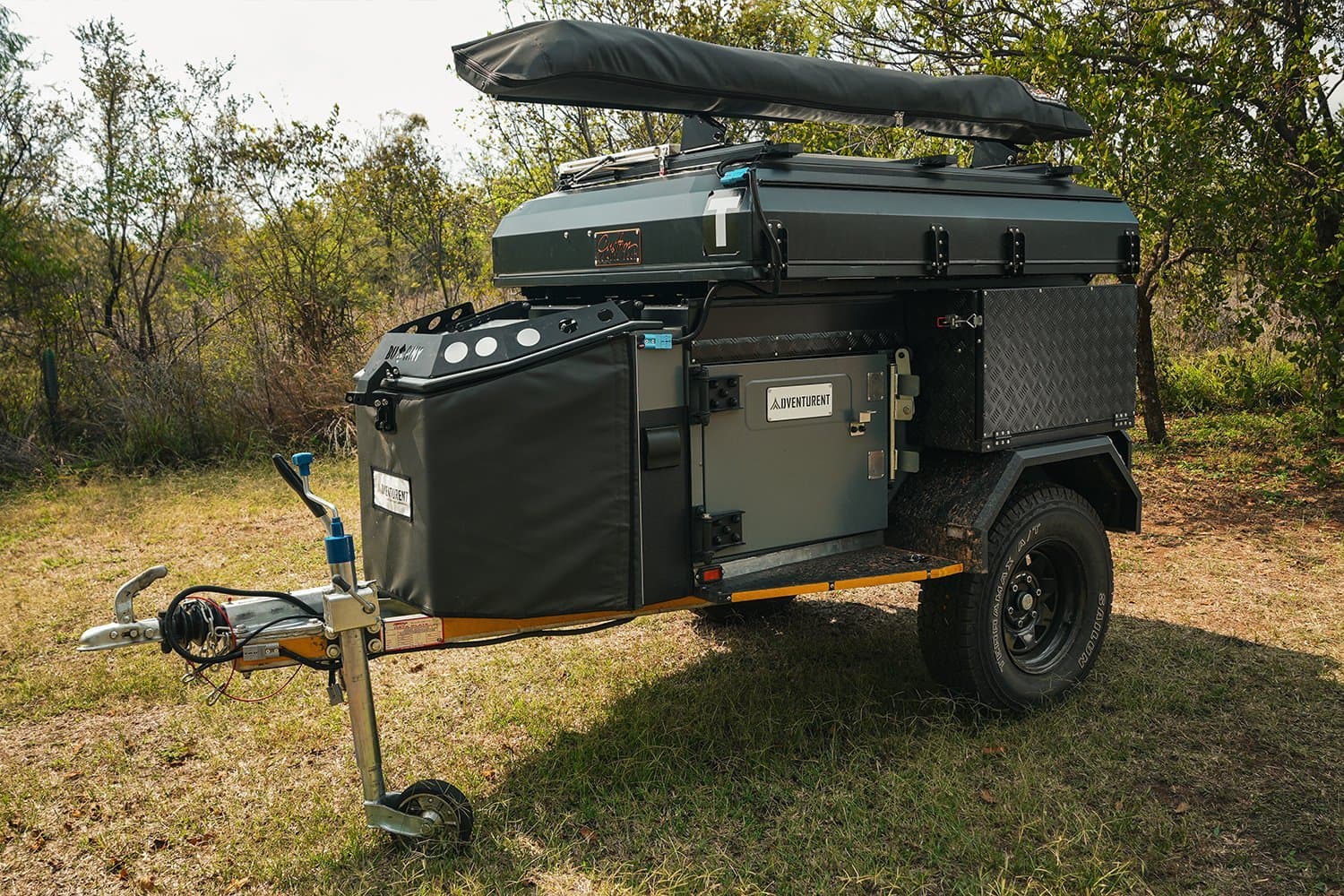
The two ways to rent a camper trailer
This is the single most important thing to understand, because it shapes everything else: price, choice, quality and risk.
1. Peer-to-peer (renting a private owner’s trailer)
Kampi (kampi.co.za) is South Africa’s peer-to-peer camper and caravan rental marketplace, essentially “Airbnb for caravans.” You rent a trailer directly from its private owner. The platform handles the booking, payment (held in escrow), insurance and verification.
- Upside: the most choice and usually the best prices: lightweight trailers start from around R519/day. There are hundreds of listings across all nine provinces, and many owners include their own kit and tips.
- Downside: because every trailer belongs to a different private owner, condition, kit and responsiveness vary from listing to listing. The platform mediates disputes but, in its own words, “cannot directly control individual rental agreements.” This shows in the reviews: Kampi is solid on Google () but noticeably more mixed on Trustpilot and Hellopeter (roughly 3 / 5), where unhappy edge-case customers tend to land. The pattern is consistent: most trips go smoothly, but the weak point is the edge cases: a breakdown far from home, a grey area in what the insurance covers, or a slow deposit refund. So with P2P, reading the specific listing’s reviews and asking the owner direct questions matters more than usual (more on that below).
2. Fleet specialists (renting from a professional rental company)
These companies own and maintain their own fleet of off-road trailers and caravans. You’re not dealing with a private individual; you’re dealing with a business whose whole job is keeping rental trailers trip-ready.
- Upside: consistent, professionally maintained trailers, full overland kit, a proper handover, and branch/roadside support if something goes wrong.
- Downside: higher day rates and less variety than the P2P pool.
Here’s how the main camper-trailer operators compare: Kampi’s peer-to-peer option alongside the best-known fleet specialists. Conqueror is the premium, award-winning name; CampEzi and Go Camp both offer lightweight trailers you can tow on a Code B licence; and Camp Guru is Gauteng-only with no cross-border.
| Operator | Based | From | Notes | |
|---|---|---|---|---|
| Kampi P2P | Nationwide | R519/day | Widest choice; quality varies by owner | |
| Go Camp Fleet | Cape Town & JHB | — | Code B & EB options; 3-night minimum | |
| Kubu 4x4 Fleet | 5 branches | — | Biggest specialist fleet | |
| Conqueror Fleet | Johannesburg | — | Premium; award-winning | |
| Camp Guru Fleet | Edenvale | — | Budget–luxury; no cross-border | |
| Bundu Fleet | Hartbeespoort | R750/day | Cross-border allowed | |
| CampEzi Fleet | — | Pretoria | — | Echo 3 tows on a Code B licence |
Google ratings refresh automatically for operators with a Google listing; “—” means no public Google rating. Day rates are indicative — confirm current pricing when you book.
A note on reviews and ratings. The Google ratings shown above come straight from each operator’s Google listing (and refresh automatically for those with one), and most score strongly. Two cautions, though: Kampi is more mixed on Trustpilot and Hellopeter (roughly 3/5) than on Google, where unhappy edge-case customers tend to land; and Conqueror also manufactures and sells caravans, so its general review pages mix in warranty and sales complaints rather than reflecting the rental arm specifically. Best practice: read the recent Google reviews for the exact branch you’d book from, and weigh first-hand 4x4-community feedback alongside the star number.
Which should you choose? Rent peer-to-peer (Kampi) if you want the widest choice and the best price and you’re comfortable vetting an individual listing. Rent from a fleet specialist if you’d rather pay more for guaranteed condition and proper support, especially for a long or remote trip where a breakdown would ruin the holiday.
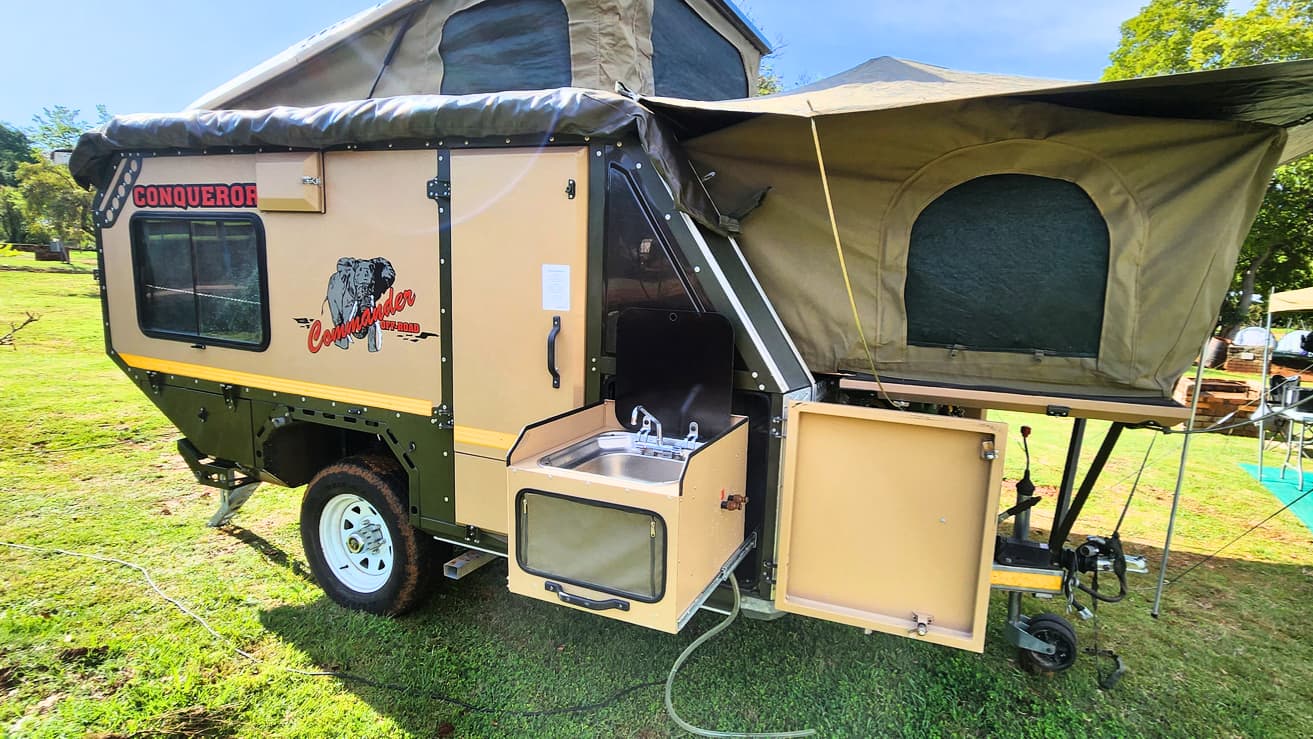
Can your vehicle tow it? (The part people get wrong)
Renting a trailer is different from renting a whole vehicle: you supply the tow vehicle. So before anything else, make sure your vehicle and your licence are legal for the trailer you want.
Licence: the most common gotcha. A standard Code B licence only covers towing a trailer with a gross vehicle mass (GVM) up to 750 kg. Most off-road caravans and larger camper trailers are heavier than that, which means you legally need a Code EB licence. Towing on the wrong licence is illegal and gives your insurer grounds to reject a claim, so check the trailer’s GVM against your licence first. One more trap: if your Cruiser has been upgraded to a GVM over 3,500 kg, EB no longer covers it, and you need Code EC1 to tow a trailer over 750 kg.
Towing capacity: check your model. The 2.8 GD-6 (and older V8) 79 and the 2.8 76 are rated to tow 3,500 kg braked, comfortably more than almost any camper trailer (typically 750 to 1,500 kg loaded). The 4.0 petrol and 4.2 diesel 79 and the 78 are rated only 1,500 kg braked, with a 4,700 kg GCM, so a heavier off-road caravan can be over the limit. Either way, check two numbers in your owner’s manual:
- Braked towing capacity: the maximum trailer weight your vehicle can pull.
- Gross Combination Mass (GCM): the maximum combined weight of your fully-loaded vehicle and trailer. It’s easy to be under your tow rating but over GCM once both are packed.
Brakes and tow bar. Trailers over 750 kg should have over-run (braked) couplings, so confirm the trailer has them. Your tow bar and tow ball must be rated for the loaded trailer weight, with roughly 7 to 10% of the trailer’s weight pushing down on the tow ball (the “nose weight”) for stable towing.
Fuel. Plan for it: towing increases fuel consumption by roughly 25 to 30%, which matters a lot on long Kalahari or cross-border legs where fill-ups are far apart.
Not sure what your Cruiser is worth or rated to do? Our valuation tool and live market data cover the model side, and the towing figures above are in your vehicle’s manual.
What to check before you book
The universal rental checks (insurance excess, how the deposit is held, mileage limits, fuel policy and a full photo walkaround at collection) are the same as for any rental, and we cover them in detail in our Land Cruiser rental guide. Here are the checks specific to a camper trailer, drawn from where real rentals go wrong:
- GVM vs your licence and tow bar. Get the exact loaded GVM in writing and match it to your Code B/EB licence and tow bar rating.
- Over-run brakes and a breakaway cable, present and working.
- Tyres, wheel bearings and the spare. Ask when bearings were last repacked and tyres replaced: bearings are the classic trailer failure on long gravel. Confirm the spare and jack fit the trailer, not just your car.
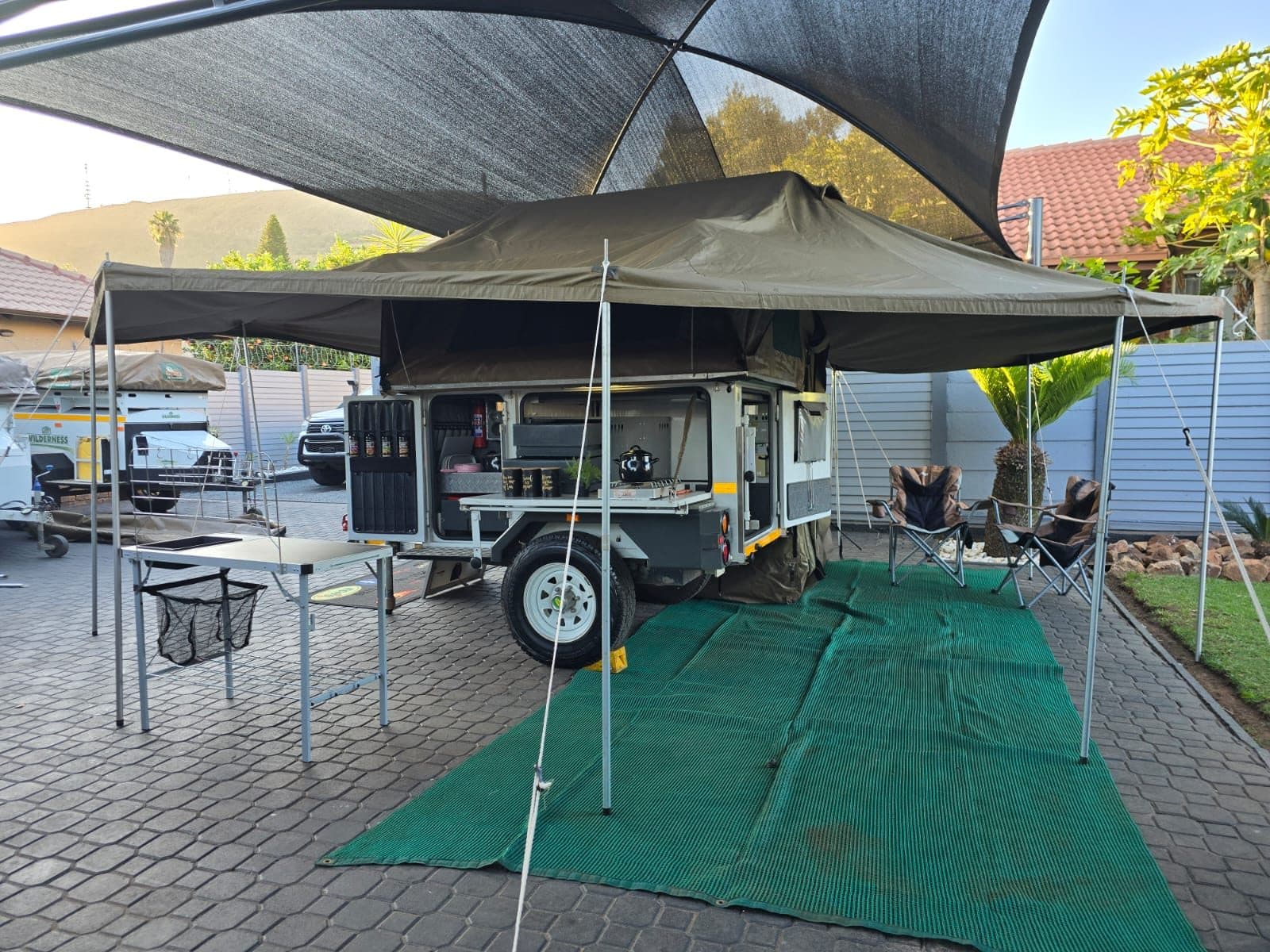
- Exactly what kit is included: rooftop tent or trailer tent, bedding, kitchen, fridge/cooler, gas, water tanks, solar/battery, awning. Don’t assume; get a list.
- Insurance scope, not just the daily price. Confirm in writing what the cover excludes (gravel-road damage, tyres, water damage, cross-border) and what the excess is. “Insured” and “covered for what you’re about to do” are not the same thing.
- The breakdown plan. This is the big one, especially peer-to-peer: if it breaks down 400 km from anywhere, who fixes it, who pays, and how fast? A good owner or company has a clear, confident answer. A vague one is a red flag, so get it resolved before you pay.
- Cross-border letters. Heading into Botswana, Namibia or beyond? You’ll need the owner’s authorisation letter and the trailer’s papers. Confirm these exist before you book.
What it costs
| Peer-to-peer (Kampi) | Fleet specialist | |
|---|---|---|
| Day rate (from) | ~R519/day | ~R600 to R1,500+/day |
| Choice | Widest (100s of listings) | Limited to their fleet |
| Condition | Varies by owner | Consistent, professionally kept |
| Insurance | ~R89/day, King Price-underwritten, optional add-on | Usually built into the rate |
| Support if it goes wrong | Owner + platform mediation | Branch + roadside support |
| Best for | Budget, variety, shorter/closer trips | Long or remote trips, peace of mind |
(Rates move with season and demand, so always confirm the current price, deposit and insurance terms at the time of booking.)
Whichever route you choose, the cheapest option isn’t always the best value: on a long or remote trip, a slightly pricier, well-maintained trailer with real support behind it can be the difference between a great holiday and a stranded one.
Planning the trip
Once the trailer’s sorted, the rest is route and prep:
- Use Tracks4Africa for off-road routing, and keep paper maps as backup, since phone coverage is sparse in remote areas.
- Do a shakedown night close to home before any remote expedition, so you learn the trailer’s quirks where it’s easy to fix things.
- Reduce tyre pressure on loose surfaces (around 1.8 bar for gravel and 1.4 bar for sand) and slow right down over corrugations to protect your (and the trailer’s) wheel bearings.
- Pack enough water in reserve for the whole group for two to three days.
The bottom line
Renting a camper trailer is the cheapest, lowest-commitment way to get a proper overland setup behind your Land Cruiser. Go peer-to-peer with Kampi for the widest choice and best prices if you’re happy to vet the individual listing, or go with a fleet specialist like Conqueror, Kubu 4x4 or Go Camp if you’d rather pay for guaranteed condition and support. Either way, sort the licence and towing maths first, pin down the insurance scope and the breakdown plan, and you’re set.
Towing your first overland trip? Our 4x4 training course is a full day of practical skills (recovery, navigation, tyre and trailer management) for R4,250 per person. The best prep you can do before you hit the gravel.